projects
06 entries
Things I've built in labs, internships and my own startup: LLM pipelines, models of gene expression and immune binding, robots, and tools for designers.
Project PIE
01
A project intelligence engine for Keycloak, an open-source Identity and Access Management system with 6,000+ active contributors. An LLM code review tool that surfaced 1.5k+ unaddressed issues, with LLM and vector-search detectors for duplicate PRs, stale issues and shared root causes. Cut GitHub API calls 100x on a 500-PR repo and made PR-comment sync 3x faster with batching and goroutines.
GoChromaDBGitHub APIVector EmbeddingsRAGPrompt EngineeringArtery
02
A marketplace that matches a hotel art consultant’s brief to vetted emerging artists, backed by Microsoft for Startups. The matching engine ranks artists on a 6-factor fit score across style, medium and budget, and a 6-stage ingestion pipeline sourced, enriched and indexed 102 grant-winning artists for search.
ReactExpressPostgreSQLAzureAzure Cognitive SearchPlaywrightORB
03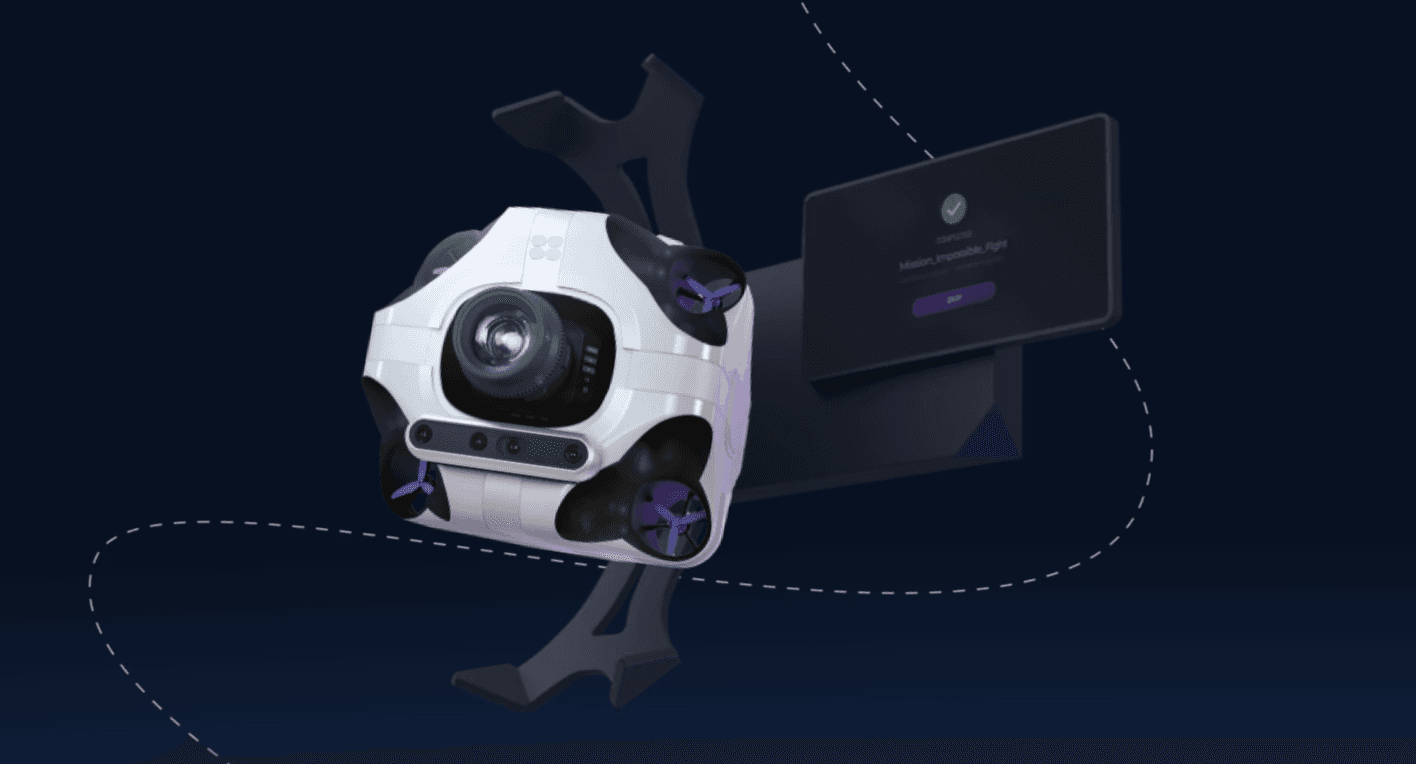
RGB-D SLAM for a Techstars-backed space robot launching to the ISS in early 2027. Visual odometry with ORB features and PnP-RANSAC, IMU dead reckoning as a fallback, a handrail detector on depth point clouds with RANSAC plane and line fitting, and a live map dashboard.
SLAMROS 2RTAB-MapPythonPoint Cloud ProcessingFastAPIAntares
04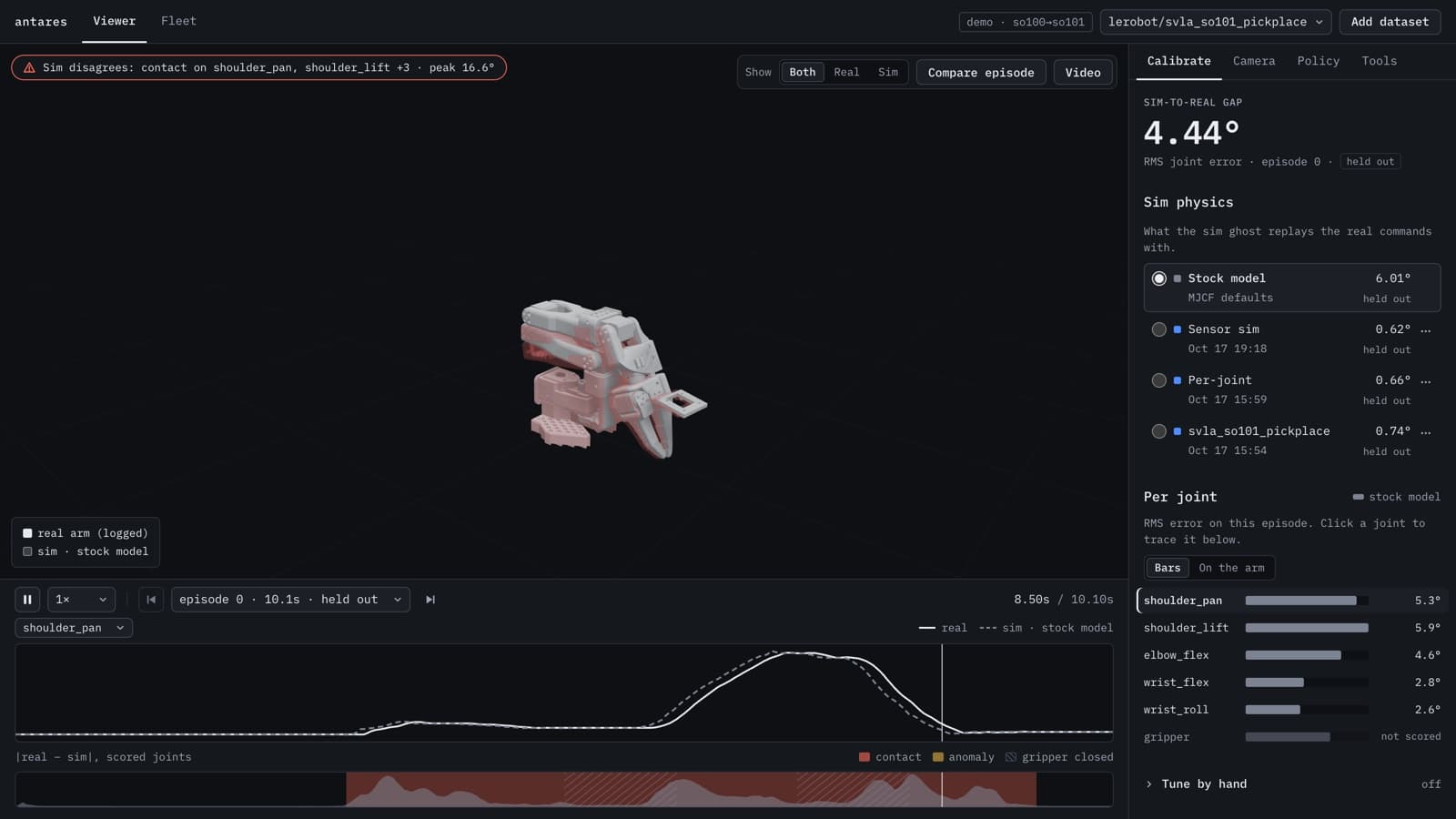
Give it a robot arm's logs, get a simulator that matches that arm. Built at LA Hacks: a MuJoCo simulator fitted to one arm's own logs tracks it to 0.74° error, against 6.01° for the stock simulator. Controllers trained with CMA-ES in the calibrated sims cut tracking error on 10 unseen arms from 3.27° to 0.81°. Comes with a live calibration viewer and a tool that diagnoses the physical cause of drift.
PythonMuJoCoCMA-ESFastAPIReactThree.jsProCapNet and BPNet
05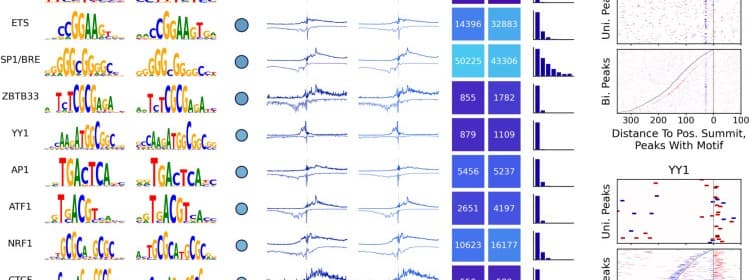
Deep learning models built on BPNet that predict transcription initiation from DNA sequence and identify the regulatory motifs that drive it. Adding chromatin signals to the model's predictions raised adjusted R² from 0.57 to 0.73, and a residual network on 8 histone marks beat the sequence-only model in 3 of 4 cell types. Second-author paper in Nature Genetics.
Read the paper →PythonPyTorchModel InterpretabilityDeepSHAPTF-MODISCOPRO-cappMHC-TCR Binding Model
06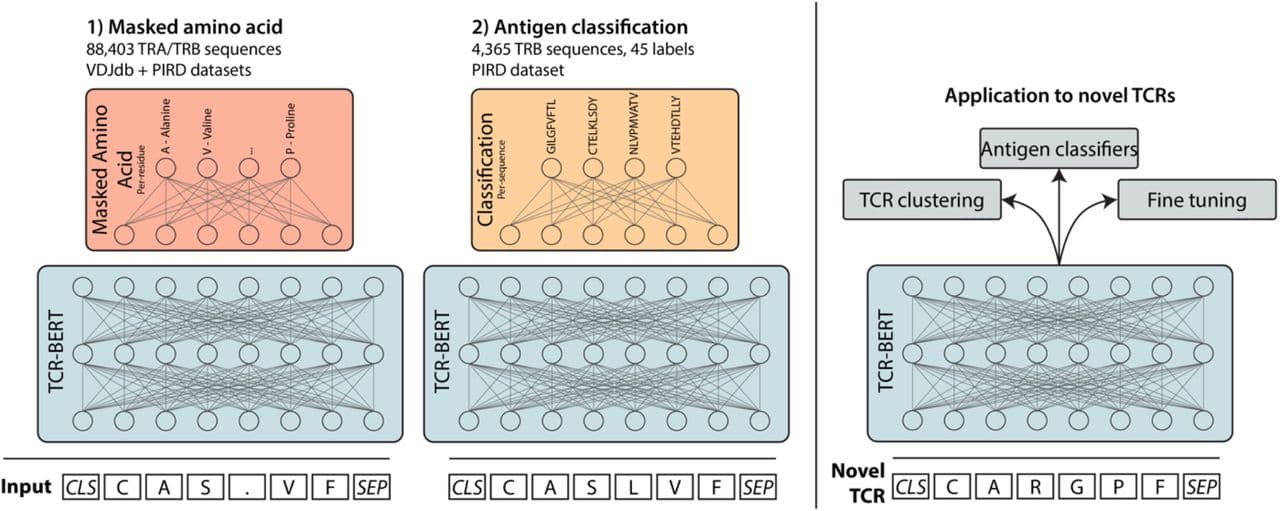
Deep learning models that predict pMHC-TCR binding, whether a T-cell receptor recognizes a given peptide-MHC complex, directly from molecular structure data. Built for the lab's immune-response modeling research.
PythonCNN DesignStatistical ModelingPCAModel InterpretabilityData Pipeline Architecture